Showing posts with label Future of Space Exploration. Show all posts

Thursday, July 20, 2017

From Olduvai Gorge to the Sea of Tranquility


This is an essay I wrote eight years ago to mark the fortieth anniversary of the Apollo 11 Moon landing and was originally posted on the National Space Society's blog site on  August 10, 2009.


By far the two most remarkable photographs of the twentieth century are the ones shown above. For they encapsulate the whole evolutionary and cultural history of humanity and its possible destiny.


In 1978, paleoanthropologist Mary Leaky and her team discovered the earliest hominid footprints (dated to be three and a half million years old) preserved in the volcanic ash at Laetoli, forty-five kilometres south of Olduvai Gorge in Tanzania. They belong to one of our proto-human ancestors - Australopithecus afarensis. The picture above shows one of these fossil footprints next to the boot print left by Neil Armstrong in the volcanic soil of Mare Tranquilitatis (the Sea of Tranquillity).

It is very symbolic of the giant evolutionary leap forward we have taken as a species. From Olduvai Gorge to the Sea of Tranquillity, we humans have travelled very far.

Friday, September 2, 2016

Man on Mars - Mission to the Red Planet


Today on Far Future Horizons we present another exciting episode of the acclaimed BBC science documentary series Horizon.

This instalment of Horizon goes behind the scenes at NASA to discover how it is preparing for its most ambitious and daring mission: to land men - and possibly women - on the surface of Mars.

Sunday, December 20, 2015

The Universe - Space Travel


Today on Far Future Horizons we are going to look at some revolutionary ideas about travelling in space, from spaceship designs to innovative methods of propulsion such as solar sails and laser beams. We will also take a look at antimatter as a power source and the possibilities of faster-than-light travel that could make the greatest dream of science fiction a reality. 


Our video feature for today is History Channel’s outstanding documentary series The Universe ~ Space Travel.


Wednesday, July 22, 2015

Friday, June 19, 2015

The Edge of Space


The great visionary and science fiction writer Robert Heinlein was once quoted as saying “Once you’re in low Earth orbit (LEO), you’re halfway to anywhere.” Today on Far Future Horizons we explore this realm close to home which is the gateway to the rest of the solar system and beyond.


Low Earth Orbit, 120 miles (193 kilometres) above sea level, is where the majority of space exploration has occurred and new commercial endeavours are being developed.


It will also be staging ground for the next ultimate thrill of your life – Space Diving. 


Friday, December 19, 2014

Journey To Space


Today on Far Future Horizons we showcase an exciting new and inspirational IMAX film “Journey To Space” premiering at the National Air and Space Museum in Washington, D.C. in February.

Wednesday, December 3, 2014

Monday, May 26, 2014

Living on the Moon


"If God wanted man to become a spacefaring species, He would have given man a moon." ~ Krafft Ehricke


Today on Far Future Horizons we present a fascinating episode from the National Geographic Channel’s documentary series “Naked Science”.

In this installment of “Naked Science” we look at the exciting possibility of using our celestial neighbour, the Moon, as a stepping stone that will allow humanity to colonise the solar system and beyond.


Friday, May 2, 2014

Exodus Earth ~ Exoplanet


Today on Far Future Horizons we join Dr. Basil Singer in the final installment of the exciting documentary series Exodus Earth. 

Dr. Singer explores the possibility of mounting an interstellar voyage to the exoplanet Gliese 581c and establishing a permanent human colony there in the next century.


What kind of propulsion system would be needed to accomplish such a voyage? Basil must investigate extreme propulsion methods, including solar sails and nuclear bombs. And, what can we say about the mission’s destination? 


Thursday, May 1, 2014

Exodus Earth ~ Mercury


Today on Far Future Horizons we join physicist Dr. Basil Singer in exploring the possibility of establishing a human outpost on Mercury, the most extreme planet in the solar system. 


Exodus Earth ~ Mars


Mars is a world that holds a special mystique for humanity. We have been held under its captive spell for over a century. It is the one world where humanity expected to find life and sentience beyond the Earth. And, in the minds of many space visionaries today, Mars is the one world most likely to sever as a secondary planetary abode for terrestrial life and consciousness.


The colonization of Mars has been the topic of both romantic speculation and serious scientific study before the dawn of the Space Age. But, it has only been during the past forty years, beginning with observations of Mariner 9 and culminating with recent space missions of Mars Odyssey, Mars Express and the Mars Reconnaissance Orbiter, that we can now assess the full resource potential of this world. 

Wednesday, April 30, 2014

Exodus Earth ~ Venus


Venus is a hellish planet and within our solar system the world that is most reminiscent of Dante’s vision of Inferno. Today on Far Future Horizons, we join physicist Dr. Basil Singer and explore the possibility of colonizing Venus.


Venus is perhaps the most difficult planet in the solar system that we could possibly colonize. Yet, the colonization of Venus has been a subject of much speculation and many works of science fiction since before the dawn of spaceflight, and is still much discussed. Are floating cloud cities hovering over Venus’ hellish surface in our future?


Friday, April 25, 2014

Exodus Earth ~ Callisto


Today on Far Future Horizons we join physicist Dr. Basil Singer in exploring the potential of establishing a human outpost in the Jovian system on the moon Callisto.


Callisto is one of the Galilean moons discovered by Galileo in January 1610 along with three other large Jovian moons—Ganymede, Io, and Europa.


Callisto is the third-largest moon in the Solar System and the second largest in the Jovian system, after Ganymede. Callisto has about 99% the diameter of the planet Mercury but only about a third of its mass. It is the fourth Galilean moon of Jupiter by distance, with an orbital radius of about 1,880,000 km.


Thursday, April 17, 2014

Sci-Fi Science - Galactic Colonization


Today on Far Future Horizons we present another episode of Dr. Michio Kaku’s acclaimed documentary series “Sci Fi Science” and explore the exciting possibility of creating a galactic civilization.


The Kardashev Scale

Sunday, April 13, 2014

Exodus Earth ~ Titan


Today on Far Future Horizons we begin a brand new series of exciting documentaries titled “Exodus Earth” *also known as "Space Pioneer"  hosted by British physicist Dr. Basil Singer. In this series Dr. Singer explores one very important question - does humanity have a future in the Cosmos beyond its planetary home the Earth? Our first destination is Saturn's moon Titan.


Saturn Rise Over Titan's Surface


In Exodus Earth, the six-part series, we investigate if humans could possibly call Mercury, Venus, Mars, Saturn's moon Titan, Jupiter's moon Callisto and the exosolar planet Gliese 581c home in the future.


Monday, March 31, 2014

Future Flight (1987)


Today on Far Future Horizons we present Future Flight (1987) hosted by the late Christopher Reeve of Superman fame.


This documentary addresses ten of the greatest possible air and space adventures of the coming century from the perspective of 1987. Using state-of-the-art special effects and historic footage, the program shows how yesterday's science fiction can become tomorrow's science fact.


Monday, February 3, 2014

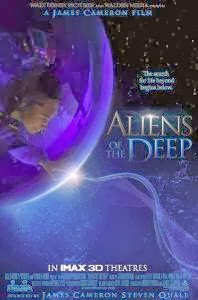
In Search of Aliens of the Deep

Aliens of the Deep, is an IMAX motion picture made by Academy Award® winning director, deep ocean adventurer, and space exploration visionary James Cameron.

This documentary combines his film making talents with his personal passions on a journey to some of the Earth's deepest, most extreme and unknown environments in search of the strange and alien creatures that live there. Joining him is a team of young NASA scientists and marine biologists who share his interests as they consider how these life forms represent life we may one day find in outer space not only on distant planets orbiting distant stars, but also within our own solar system. Aliens of the Deep, takes audiences on that very journey deep beneath the sea and far into the reaches of our universe to encounter alien life, face to face, and to inspire a new generation of explorers.


Thursday, January 30, 2014

Voyage to Pandora: Humanity's First Interstellar Flight


Today on Far Future Horizons we take an imaginary voyage to the world of Pandora depicted in the motion picture Avatar and look at the possibility of humanity one day taking a very real interstellar odyssey to worlds beyond our solar system.

The setting of the movie Avatar takes place in the year 2154 on the terrestrial like moon of Pandora.


Pandora is a lush, Earth-like moon of the planet Polyphemus in the Alpha Centauri star system. Pandora is inhabited by the Na'vi, a ten-foot-tall blue-skinned species of sapient humanoids, who live in harmony with nature, worshiping a mother goddess called Eywa.


Its location is a real place - Alpha Centauri, the nearest star to our Sun and the most likely destination for our first journey beyond the solar system.


Remarkably, it is anti-matter, the science fiction fuel of choice that could take us there. Normally, it's only created in powerful jets that roar out of black holes. We can now produce small quantities in Earth-bound particle colliders. Will we journey out only to plunder other worlds? Or will we come in peace? The answer may depend on how we view our home world, the Earth, at that time in the distant future.